 |
| Source: Hindustan times 28 Sept 2013
A cartoon published in the newspaper portrays exactly what is happening between India and Pakistan.
|
Sunday, September 29, 2013
Hind-Pak 'Dosti'


Wednesday, September 25, 2013
Wavell Plan and it's rejection
 |
| Lord Wavell |
In 1943 Lord Wavell became the Viceroy.
He believed that Britain cannot continue to rule India for long. So in order to
retain India as a willing member of the British Commonwealth, he decided to
hold a meeting in Shimla on 25 June 1945. Before that he put forward his plan:
1.
A new constitution would be
formed only after major political parties had reached an agreement.
2.
Viceroy’s executive council
will have equal number of caste Hindus and Muslims.
3.
Viceroy’s veto power was to
continue.
4.
A British High Commissioner
would live in India.
Monday, August 12, 2013
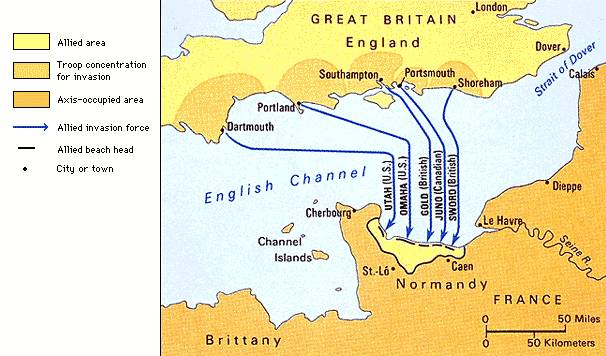
D-Day
OPERATION
OVERLORD
(INVASION
OF NORMANDY)
 |
| http://homepage.eircom.net/~finnegam/war/normandy_invasion.htm |
(THE D – DAY)
During World War II (1939-1945), the
Battle of Normandy, which lasted from June 1944 to August 1944, resulted in the
Allied liberation of Western Europe from Nazi Germany’s control. Codenamed Operation
Overlord, the battle began on June 6, 1944, also known as D-Day, when some
156,000 American, British and Canadian forces landed on five beaches along a
50-mile stretch of the heavily fortified coast of France’s Normandy region. The
invasion was one of the largest amphibious military assaults in history and
required extensive planning. Prior to D-Day, the Allies conducted a large-scale
deception campaign designed to mislead the Germans about the intended invasion
target. By late August 1944, all of northern France had been liberated, and by
the following spring the Allies had defeated the Germans. The Normandy landings
have been called the beginning of the end of war in Europe.
After World War II began, Germany invaded
and occupied northwestern France beginning in May 1940. The Americans entered
the war in December 1941, and by 1942 they and the British were considering the
possibility of a major Allied invasion across the English Channel.
The
following year, Allied plans for a cross-Channel invasion began to ramp up. In
November 1943, Adolf Hitler, who was aware of the threat of an invasion along
France’s northern coast, put Erwin Rommel in charge of spearheading defense
operations in the region, even though the Germans did not know exactly where
the Allies would strike. Hitler charged Rommel with finishing the Atlantic
Wall, a 2,400-mile fortification of bunkers, landmines and beach and water
obstacles.


In January 1944, General Dwight Eisenhower
(1890-1969) was appointed commander of Operation Overlord. In the months and
weeks before D-Day, the Allies carried out a massive deception operation
intended to make the Germans think the main invasion target was Pas-de-Calais
(the narrowest point between Britain and France) rather than Normandy. In
addition, they led the Germans to believe that Norway and other locations were
also potential invasion targets.
Many tactics was used to
carry out the deception, including fake equipment; a phantom army commanded by
George Patton and supposedly based in England, across from Pas-de-Calais;
double agents; and fraudulent radio transmissions.
Eisenhower
selected June 5, 1944, as the date for the invasion; however, bad weather on
the days leading up to the operation caused it to be delayed for 24 hours (6
June 1944).Later that day, more than 5,000 ships and landing craft carrying
troops and supplies left England for the trip across the Channel to France,
while more than 11,000 aircraft were mobilized to provide air cover and support
for the invasion.
The first wave of the attack began with
the paratroopers. These were men who jumped out of planes using parachutes.
They jumped at night in the pitch dark and landed behind enemy lines. Their job
was to destroy key targets and capture bridges in order for the main invasion
force to land on the beach. Thousands of dummies were also dropped in order to
draw fire and confuse the enemy.
In the next stage of the battle thousands of planes dropped bombs on German
defenses. Soon after, warships began to bomb the beaches from the water. While
the bombing was going on, underground members of the French Resistance
sabotaged the Germans by cutting telephone lines and destroying railroads. The amphibious invasions began at 6:30 a.m.
The British and Canadians overcame light opposition to capture beaches
codenamed Gold, Juno and Sword, as did the Americans at Utah Beach. U.S. forces
faced heavy resistance at Omaha Beach, where there were over 2,000 American
casualties.
However, by day's end, approximately
156,000 Allied troops had successfully stormed Normandy’s
beaches. According to some estimates, more than 4,000 Allied troops lost
their lives in the D-Day invasion, with thousands more wounded or missing. Less
than a week later, on June 11, the beaches were fully secured and over 326,000
troops, more than 50,000 vehicles and some 100,000 tons of equipment had landed
at Normandy.
For their part, the Germans suffered from
confusion in the ranks and the absence of celebrated commander Rommel, who was
away on leave. At first, Hitler, believing the invasion was a feint designed to
distract the Germans from a coming attack north of the Seine River, refused to
release nearby divisions to join the counterattack. Reinforcements had to be
called from further afield, causing delays. He also hesitated in calling for
armored divisions to help in the defense. Moreover, the Germans were hampered
by effective Allied air support, which took out many key bridges and forced the
Germans to take long detours, as well as efficient Allied naval support, which
helped protect advancing Allied troops.
In the ensuing
weeks, the Allies fought their way across the Normandy countryside in the face
of determined German resistance, as well as a dense landscape of marshes and
hedgerows. By the end of June, the Allies had seized the vital port of
Cherbourg, landed approximately 850,000 men and 150,000 vehicles in Normandy,
and were poised to continue their march across France.
By the end of August 1944, the Allies had
reached the Seine River, Paris was liberated and the Germans had been removed
from northwestern France, effectively concluding the Battle of Normandy. The
Allied forces then prepared to enter Germany, where they would meet up with
Soviet troops moving in from the east.
The Normandy invasion began to turn the
tide against the Nazis. A significant psychological blow, it also prevented
Hitler from sending troops from France to build up his Eastern Front against
the advancing Soviets. The following spring, on May 8, 1945, the Allies
formally accepted the unconditional surrender of Nazi Germany. Hitler had
committed suicide a week earlier, on April 30.
Interesting Facts about D-Day
- 1 The troops needed the light of a full moon to see to attack. For this reason there were only a few days during a month when the Allies could attack. This led Eisenhower to go ahead with the invasion despite the bad weather.2. The Allies wanted to attack during high tide as this helped the ships to avoid obstacles put in the water by the Germans.3. Although June 6 is often called D-Day, D-Day is also a generic military term that stands for the day, D, of any major attack.4. The overall military operation was called "Operation Overlord". The actual landings at Normandy were called "Operation Neptune".5. The Normandy American Cemetery, overlooking Omaha Beach and the English Channel, was established on June 8, 1944, as the first U.S. cemetery in Europe during World War II. It holds the graves of more than 9,300 U.S. servicemen who died in the D-Day invasion or subsequent missions.
Monday, April 2, 2012
Lucknow Pact - The Bond of League and Congress
|
Following are the main causes for the Lucknow Pact signed between the Indian National Congress and Muslim League in 1916
1)
Change
in the objective of the Muslim League: Loyalty towards the government was one of the
main objectives of the League, but in 1913, the League had amended its
constitution to include a system of self government. Therefore it agreed with
congress to have a political goal for India.
2)
International
Events: In the
first world war Turkey had to fight against Britain. The Turkish ruler was
the Caliph or religious head of the Muslims. Therefore the Muslims all over
the world felt that the Turkish ruler needed their help and sympathy. So
Muslim League turned against the British.
3)
A
compromise between the two factions of the Congress:Mrs. Annie Besant made efforts
to reunite the two wings of the congress-the Moderates and the Radicals.
Tilak rejoined the Congress in 1916. He also played a very important role in
bringing congress and League on the same platform.
4)
National
Events: To
reunite the two wings of the congress-the Moderates and the Radicals. Tilak
rejoined the Congress in 1916. He also played a very important role in
bringing congress and League on the same platform.
5)
National
Events: Due to
anti partition movement partition of Bengal was cancelled in 1911. The
Nationalist Muslims used this as an opportunity to spread nationalist ideas
among the Muslims.
Under Seditious Meeting Act
some Muslim leaders were arrested. This gave a set back to the Muslim League.
|
Monday, September 26, 2011
Demand for Pakistan
Sir Muhammad
Iqbal in 1930 conceived a plan of a Muslim State. Later on a group of youngmen
led by Rahmat Ali propagated this plan. Their plan was different from that of
Iqbal. Sir Iqbal wanted the merger of the provinces where muslims were in
majority into a single State within Indian Federation. However Rahmat Ali
proposed that these provinces should have a separate federation of their own.
He called it as Pakistan.
P - Punjab
A - Afghan Province (NWFP- North West
Frontier Province)
K - Kashmir
I Sindh
S
T
A
Baluchistan
N
Friday, January 28, 2011

Wednesday, August 18, 2010
Indian National Congress and promotion of Nationalism
The formation of the Indian
national congress in 1885 by A.O. Hume was the most remarkable event in the
History of India. Lord Dufferin favoured the foundation of the party because he
wanted it to act as a safety valve for
popular discontentment to safeguard the British rule in India but soon
congress turned out to be a revolutionary organisation leading the people to
independence.
Congress helped in uniting the
people of different religions, regions,
classes, castes, languages and so on.
For the first time political
unity was being sponsored by forward looking Indians.
Congress was the first
organisation that helped to train and organise public opinion in India.
Tuesday, July 6, 2010
Queen Victoria Declaration of 1858
Queen
Victoria was reigning in England in England during the revolt. The Queen’s
proclamation incorporating the transfer of governance from East India Company
to the British Crown was made public at Allahabad on November 1, 1858 by Lord
canning, the first viceroy of India. The proclamation promised that the
government of India would :
i.
Follow a policy of Non-intervention in social and
religious matters of Indians
ii.
Treat all subjects – Indians and Europeans – as equals
iii.
Grant a general pardon to all those who had taken part
in the revolt except those who were found guilty of murder of British subjects
iv.
Do it’s best to advance the industries in India.
Wednesday, May 26, 2010
End of Communism in Soviet Union
The
rise of nationalism and demand for complete autonomy by the Republics became
the final and the most immediate cause for the disintegration of Soviet
Union. By November 1991 thirteen out of the fifteen republics had declared
their independence. The disintegration of the Soviet Union gave birth
to a new World Order. The bipolar world was replaced by a Unipolar world led by United
States.
|
Tuesday, March 2, 2010
Cold War Cartoons
 |
| Shows a tense struggle between two equals. How Khrushchev and Kennedy brought us on the brink of a Nuclear War |
 |
| Depicting hopelessness in solving problems with Soviet Russia |
Subscribe to:
Posts (Atom)





